Bexora Bexora

2026 How to Choose an AI Server Manufacturer

Time:2026-09-06 Author:Liam
0%

Choosing an AI server manufacturer in 2026 is no longer a simple hardware comparison. GPU availability matters, but it is only one part of the decision. A reliable artificial intelligence server manufacturer must also prove cooling performance, network bandwidth, firmware stability, service coverage, and long-term component support. In a real deployment, a server room may face rack limits, rising electricity prices, and delayed replacement parts. These details can change the total cost more than a small discount on the initial quote.

Industry data shows why this decision requires stronger evidence. The International Energy Agency’s Electricity 2024 report estimates that data centres consumed about 460 terawatt-hours globally in 2022. It also projects that data-centre electricity demand could exceed 1,000 terawatt-hours by 2026. Uptime Institute’s Global Data Center Survey has repeatedly identified power availability and resilience as major operational concerns. Meanwhile, IDC’s Worldwide AI and Generative AI Spending Guide highlights continued investment in AI infrastructure across enterprises and service providers. Demand is expanding quickly.

Still, market growth does not guarantee supplier quality. A polished product page proves little. Buyers should request measured inference results, training benchmarks, power figures, warranty terms, and references from comparable installations. Nvidia, AMD, and Intel platforms can perform differently under real workloads. Vendor claims may also use ideal testing conditions. That deserves scrutiny.

This guide examines how to compare manufacturers, validate technical promises, estimate ownership costs, and reduce deployment risk. No shortlist is perfect. A careful review may reveal uncomfortable trade-offs, but those findings are more useful than confident assumptions.
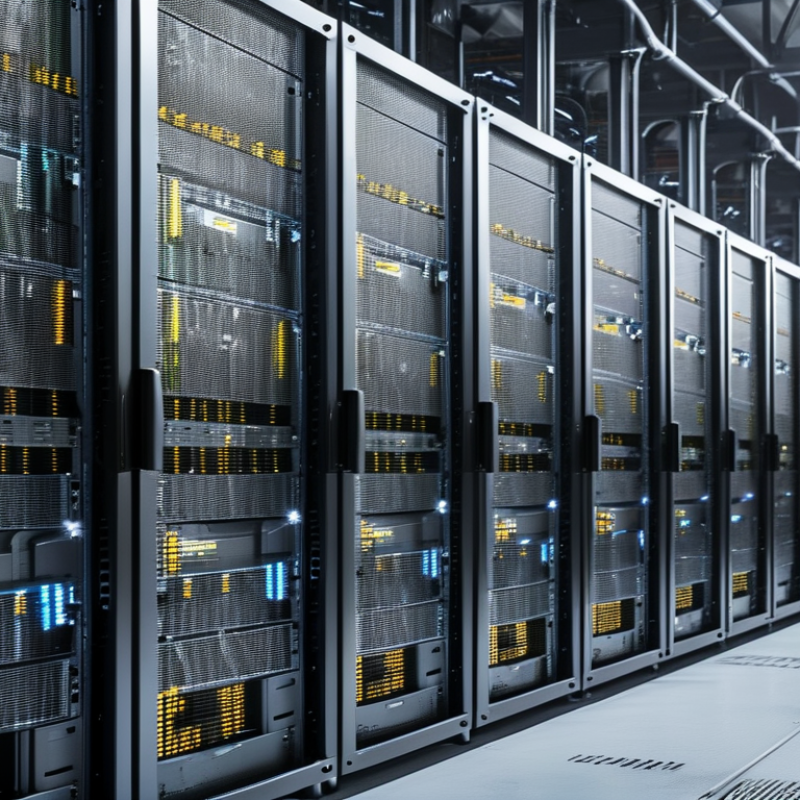
2026 How to Choose an AI Server Manufacturer

Define AI Server Requirements for 2026 Workloads

Define AI Server Requirements for 2026 Workloads

Before choosing an AI server manufacturer, define the work the system must perform. Training large models needs high accelerator density, fast interconnects, and substantial memory bandwidth. Inference workloads may require lower latency, steady throughput, or efficient performance per watt. Measure expected model size, user requests, data volume, and growth over three years. A server designed for today may become restrictive quickly.

In my experience, memory capacity is often underestimated. Check accelerator memory, system RAM, storage speed, and data transfer paths together. NVMe storage can reduce loading delays, while high-speed networking supports distributed workloads. Cooling also matters. Dense systems may need advanced airflow or liquid cooling, depending on rack conditions. A clean specification sheet can still mislead. Test with representative data, not only vendor benchmarks. I once saw a configuration perform well in a short trial but struggle during overnight workloads.

Tips

Ask manufacturers for sustained performance results, power requirements, noise levels, service response times, and firmware policies. Confirm compatibility with your existing software stack. Request a practical pilot test. Keep spare capacity for memory and power. Do not ignore maintenance access. Small design details can decide whether deployment remains reliable. Our assumptions may be wrong, so document them and review them after testing.

Compare Manufacturer Expertise, Product Design, and Performance

2026 How to Choose an AI Server Manufacturer

Manufacturer expertise should be judged through evidence, not impressive claims. Ask how long the engineering team has supported dense compute systems. Review its experience with GPU integration, high-speed networking, storage design, and liquid or advanced air cooling. A reliable manufacturer should provide clear test procedures, service records, and realistic deployment references. However, a long history does not guarantee current expertise. AI hardware changes quickly, and old experience may no longer fit modern workloads.

Product design reveals how carefully the system was engineered. Inspect airflow paths, cable placement, power redundancy, expansion space, and access for routine maintenance. A well-designed server should reduce hot spots, simplify component replacement, and protect stable operation under continuous load. Performance should be measured with your workloads, not only headline specifications. Compare training time, inference latency, memory bandwidth, energy use, and performance consistency over long tests. A short benchmark can look excellent. It may hide thermal throttling.

Tips: Request identical test conditions from every manufacturer. Check room temperature, software versions, accelerator settings, and workload size. Ask for failure-response times and spare-part availability. Keep the results in one comparison sheet. Small details matter.

Do not ignore integration quality. Firmware updates, monitoring tools, driver support, and technician training affect real productivity. I have seen powerful systems lose value because maintenance procedures were unclear. No manufacturer is perfect. Leave room for testing, questions, and uncomfortable findings before signing a purchase agreement.

Evaluate GPUs, CPUs, Memory, Storage, and Networking Options

Choosing an AI server manufacturer starts with workload evidence, not a glossy GPU count. For model training, compare accelerator memory, bandwidth, thermal design, and mixed-precision support. For inference, latency and cost per request matter more. The Stanford AI Index 2025 reports a sharp fall in inference costs for GPT-3.5-level performance. This makes utilization and software efficiency critical. More accelerators can still waste money. I have seen idle cards hide behind impressive specifications.

Evaluate CPUs by core count, cache, PCIe lanes, and power efficiency. Memory capacity should match model size, batch requirements, and data preprocessing. Use error-correcting memory for sustained production workloads. Storage needs fast NVMe drives, endurance ratings, and separate paths for datasets and checkpoints. Networking deserves equal attention. The IEA Electricity 2024 report projects data-centre electricity consumption will exceed 1,000 TWh by 2026. Power delivery, cooling, and network congestion can erase theoretical GPU gains. Small details matter.

Ask the manufacturer for measured throughput, failure rates, firmware policies, and replacement times. The Uptime Institute Global Data Center Survey 2024 highlights growing power availability concerns, so validate rack-level consumption before purchase. Run repeatable tests using your own models. Do not trust peak specifications alone. A useful acceptance test measures tokens per second, job completion time, temperature, and energy per task. Procurement is rarely perfect. A cheaper server may become expensive when support is slow or upgrades require proprietary parts. Check those risks in writing.

2026 How to Choose an AI Server Manufacturer - Evaluate GPUs, CPUs, Memory, Storage, and Networking Options
Hardware Area Configuration Tier Key Specifications to Evaluate Typical Technical Range Best-Fit Workloads Selection Guidance Assessment
AI Accelerators Entry Inference Device memory: 16–32 GB
Memory type: GDDR or HBM
Interconnect: PCIe
1–2 accelerators; 150–350 W per device; PCIe Gen4 or newer Small language models, computer vision, speech recognition, batch inference Choose when model size and concurrent-user requirements are modest. Prioritize software compatibility and low operating cost. Recommended for Entry Use
AI Accelerators General Training and Inference Device memory: 40–80 GB
Memory bandwidth: approximately 1–3 TB/s
Interconnect: PCIe or high-speed accelerator fabric
4–8 accelerators; 250–700 W per device; high-speed peer-to-peer communication Fine-tuning, medium-scale model training, retrieval-augmented generation, multi-user inference Verify that the server supports the required power delivery, cooling capacity, accelerator spacing, and peer-to-peer topology. Recommended for Most Deployments
AI Accelerators Large-Model Platform Device memory: 80–192 GB
Memory type: HBM3 or HBM3E
Interconnect: high-bandwidth scale-up fabric
8 or more accelerators; 500–1,200 W per device; liquid cooling may be required Large-model pretraining, distributed fine-tuning, high-throughput serving, scientific computing Evaluate rack power, liquid-cooling support, fabric topology, collective-communication performance, and serviceability. Advanced Deployment
Host CPUs Balanced Host Core count: 32–64 cores per socket
Memory channels: 8–12 per socket
Expansion: PCIe Gen5
1–2 sockets; 64–128 total physical cores; dual-socket platforms commonly support 8-channel memory per socket General GPU hosting, data preprocessing, inference orchestration, virtualized AI services Match CPU PCIe lanes and memory bandwidth to the number of accelerators, storage devices, and network adapters. Recommended Baseline
Host CPUs CPU-Intensive AI Core count: 64–128 cores per socket
Memory support: DDR5 with ECC
NUMA: multi-socket awareness
128–256 total physical cores in a dual-socket system; high memory-bandwidth platform Data engineering, feature generation, simulation, CPU inference, large-scale preprocessing Use NUMA-aware software and ensure that accelerator, memory, storage, and network devices are attached to the correct CPU locality. Workload Dependent
System Memory Standard Capacity Memory type: ECC DDR5
Capacity: 256–512 GB
Goal: stable data staging
At least 2–4 GB of system memory per accelerator for many inference and fine-tuning environments Small and medium models, containerized inference, moderate data preprocessing ECC is essential for production reliability. Leave upgrade slots and reserve capacity for the operating system and data pipelines. Recommended for Small to Medium Systems
System Memory High Capacity Memory type: ECC DDR5
Capacity: 1–4 TB
Bandwidth: multi-channel, NUMA-balanced
Approximately 4–16 GB of system memory per accelerator, depending on dataset and preprocessing requirements Large datasets, distributed training input pipelines, graph analytics, in-memory feature stores Prioritize memory bandwidth and balanced population across channels rather than capacity alone. Recommended for Data-Intensive AI
Local Storage Operating System and Cache Drive type: enterprise NVMe SSD
Interface: PCIe Gen4 or Gen5
Protection: RAID 1 where appropriate
2 × 3.84 TB or 2 × 7.68 TB NVMe SSDs; high endurance preferred for repeated dataset access Operating system, containers, model artifacts, local inference cache, checkpoint staging Use separate boot and data devices when possible. Compare endurance ratings, sustained write speed, and power-loss protection. Recommended Baseline
Local Storage High-Throughput Dataset Tier Drive type: enterprise NVMe SSD
Array: multiple drives with software or hardware RAID
Performance: high random I/O and sustained throughput
8–24 NVMe drives; approximately 30–100 GB/s aggregate sequential throughput, depending on topology and workload Training datasets, checkpointing, vector indexes, high-concurrency data loading Check PCIe lane allocation, switch topology, thermal limits, filesystem behavior, and rebuild or failure procedures. Advanced Storage Tier
Networking General Server Connectivity Network speed: 10–25 GbE
Features: VLAN, QoS, redundant links
One or two network ports; suitable for management, API serving, storage access, and moderate data transfer Inference APIs, internal services, small-scale distributed workloads Separate management traffic from storage and workload traffic when possible. Confirm driver and operating-system support. Recommended for General Use
Networking Distributed AI Fabric Network speed: 100–400 Gb/s per adapter or port
Features: RDMA, low latency, congestion control
One or more high-speed adapters per server; redundant paths for large clusters Multi-node training, distributed inference, remote NVMe or parallel storage, large-scale model serving Evaluate end-to-end latency, topology, switch buffering, RDMA configuration, cable length, and collective-communication efficiency. Required for Cluster Scale
Power and Cooling Air-Cooled Platform Power design: redundant PSUs
Cooling: high-static-pressure fans
Monitoring: temperature and power telemetry
Approximately 2–8 kW per server, depending on accelerator count and configuration Most conventional accelerator servers and moderate-density deployments Confirm rack power distribution, inlet temperature limits, acoustic conditions, and sustained-load performance. Suitable for Standard Density
Power and Cooling High-Density Platform Cooling: direct-to-chip liquid or rear-door heat exchanger
Power: high-voltage rack distribution
Above 8 kW per server is common in dense configurations; exact requirements depend on accelerator design Large-model training, dense multi-accelerator servers, high-throughput AI clusters Require facility-level validation for coolant distribution, leak detection, service procedures, and rack power capacity. High-Density Requirement
Manageability and Reliability Production-Ready Platform Management: remote console, firmware control, telemetry
Reliability: ECC, redundant power, hot-swappable components
Out-of-band management, hardware event logs, automated firmware updates, replaceable fans and drives 24/7 inference, enterprise AI services, private cloud, regulated workloads Assess warranty response time, spare-parts availability, firmware lifecycle, diagnostic tools, and integration with monitoring systems. Recommended for Production
Technical ranges are representative planning values for contemporary AI server configurations. Actual performance and power consumption depend on accelerator architecture, software stack, workload size, data precision, cooling method, and system topology.

Assess Reliability, Security, Support, and Total Ownership Costs

2026 How to Choose an AI Server Manufacturer

Assess Reliability, Security, Support, and Total Ownership Costs

In 2026, choosing an AI server manufacturer requires more than comparing accelerator counts. Reliability appears in power design, thermal control, component validation, and repair procedures. Ask for failure-rate data, burn-in methods, and spare-part availability. A useful test is practical: request a response plan for a failed power supply at 2 a.m. Vague answers deserve caution. Real evidence matters.

Security should cover the entire server lifecycle. Check firmware signing, secure boot, access controls, vulnerability notices, and audit-log support. Ask how updates are tested before deployment. Confirm whether administrators can separate tenant data and management traffic. Independent certifications can help, but they do not replace technical questioning. Security claims need documentation.

Support quality often decides whether an expensive system remains useful. Review service-level targets, escalation paths, remote diagnostics, and engineer coverage. Measure replacement time, not just warranty length. Calculate total ownership costs, including electricity, cooling, software, training, downtime, and rack upgrades. A cheaper server may consume more power for years. That calculation is easy to underestimate. No checklist is perfect. Performance forecasts can also be wrong when workloads change. Leave room for pilot testing, honest feedback, and a revised purchasing decision.

2026 How to Choose an AI Server Manufacturer

Suggested procurement weighting for assessing reliability, security, support, and total ownership costs

This baseline scoring model assigns the highest priority to operational reliability, followed by security and total ownership costs. Support covers warranty response, spare-parts availability, service-level commitments, and technical expertise. Total ownership costs include purchase price, energy, cooling, maintenance, software, and infrastructure expenses over the expected service life.

Verify Scalability, Compliance, Delivery Capacity, and Vendor Reputation

2026 How to Choose an AI Server Manufacturer

Verify Scalability, Compliance, Delivery Capacity, and Vendor Reputation

Scalability should be tested beyond a product sheet. Ask whether the manufacturer can support higher GPU counts, faster networking, and rising power density. Request a realistic rack layout, cooling plan, and expansion timeline. A small pilot should reveal upgrade limits. Do not assume today’s configuration will fit tomorrow’s workload.

Compliance requires evidence, not confident language. Check data residency options, access controls, audit logs, secure firmware practices, and documented quality procedures. Ask for current certifications and independent assessment records. Confirm how components are tracked from production through delivery. Requirements vary by region and industry. A vague answer deserves a written follow-up.

Delivery capacity is equally practical. Review component lead times, factory testing, burn-in procedures, spare-parts policies, and installation support. Ask for milestone dates instead of one broad delivery promise. Include penalties or remedies for avoidable delays where appropriate. I have learned that a polished demonstration can hide weak after-sales support. Vendor reputation needs more than online reviews. Speak with comparable customers, inspect reference projects, and examine warranty response times. Look for transparent communication during failures, not only during sales. Reputation is built under pressure. Some evaluation gaps will remain, and that uncertainty should be recorded rather than ignored.

FAQS

: How should I define an

I server before comparing manufacturers?

What memory details should I examine?

Check accelerator memory, system RAM, NVMe storage, and transfer paths together. Insufficient memory can create loading delays and restrict future models.

How can I test real performance?

Use representative data and identical testing conditions for every manufacturer. Measure training time, inference latency, bandwidth, power use, and sustained performance. Test it overnight.

Why can short benchmarks be misleading?

A brief test may hide thermal throttling or unstable long-duration performance. One configuration I observed performed well briefly but struggled during overnight workloads.

What design features support reliable daily operation?

Inspect airflow, cable placement, power redundancy, expansion space, and maintenance access. These details can reduce hot spots and simplify component replacement.

What questions should I ask about technical support?

Request service targets, escalation paths, remote diagnostics, technician coverage, and replacement times. Ask about spare parts and support during a failed power supply at night.

How should server security be evaluated?

Review secure boot, firmware signing, access controls, vulnerability notices, and audit logs. Confirm whether management traffic and tenant data can remain separated.

How do I calculate total ownership costs?

Include electricity, cooling, software, training, downtime, rack upgrades, and maintenance. A cheaper server may consume more power for years. The forecast may be wrong.

Conclusion

Choosing the right artificial intelligence server manufacturer in 2026 begins with clearly defining the demands of your workloads, including model size, training and inference requirements, data volume, power limits, and expected growth. Compare manufacturers based on engineering expertise, product design, benchmarked performance, and their ability to provide balanced systems rather than focusing on a single specification. Carefully evaluate GPU and CPU compatibility, memory capacity, storage speed, networking bandwidth, cooling design, and support for future hardware upgrades.

A reliable selection process should also examine system stability, security controls, service responsiveness, warranty coverage, and total cost of ownership, including energy, maintenance, deployment, and software expenses. Confirm that the manufacturer can scale production, meet delivery schedules, support relevant compliance requirements, and provide consistent documentation and technical assistance. Finally, assess vendor reputation through transparent references, quality assurance practices, and a proven record of delivering dependable AI infrastructure for long-term business use.

Liam

Liam

Liam is a dedicated marketing professional with a profound expertise in the industry, where he excels at highlighting the unique advantages of our core products. With a keen understanding of market trends and consumer needs, Liam frequently updates our company’s professional blog, providing......