Bexora Bexora

2026 Best Data Center AI Server Manufacturers

Time:2026-10-24 Author:Aria
0%

The 2026 Best Data Center AI Server Manufacturers guide examines the companies shaping modern artificial intelligence infrastructure. These manufacturers build more than powerful machines. They integrate GPUs, CPUs, high-speed networking, liquid cooling, storage, firmware, and management software into dependable systems. A serious data center ai server manufacturer must also support demanding workloads, including large language models, scientific computing, computer vision, and enterprise analytics.

Jensen Huang, NVIDIA’s founder and CEO, has said, “The data center is the computer.” His statement reflects a major industry shift. Computing power now depends on complete infrastructure, not isolated processors. The strongest manufacturers understand this connection. They design systems that move data quickly, control heat, reduce downtime, and simplify deployment. Small details matter. A blocked airflow channel can lower performance. Poor cable design can slow maintenance. Weak monitoring can hide expensive failures.

This guide compares manufacturers through practical criteria. These include accelerator compatibility, server density, energy efficiency, cooling design, cybersecurity practices, warranty support, and global service capability. It also considers real deployment experience, because laboratory benchmarks do not show every operational problem. Some rankings may remain imperfect. Vendor specifications can change quickly, and regional support differs significantly. Buyers should verify current certifications, power requirements, delivery schedules, and maintenance terms before making decisions. That caution is necessary. The best choice is not always the fastest server. It may be the system that performs reliably at three in the morning, when an entire production cluster needs attention.
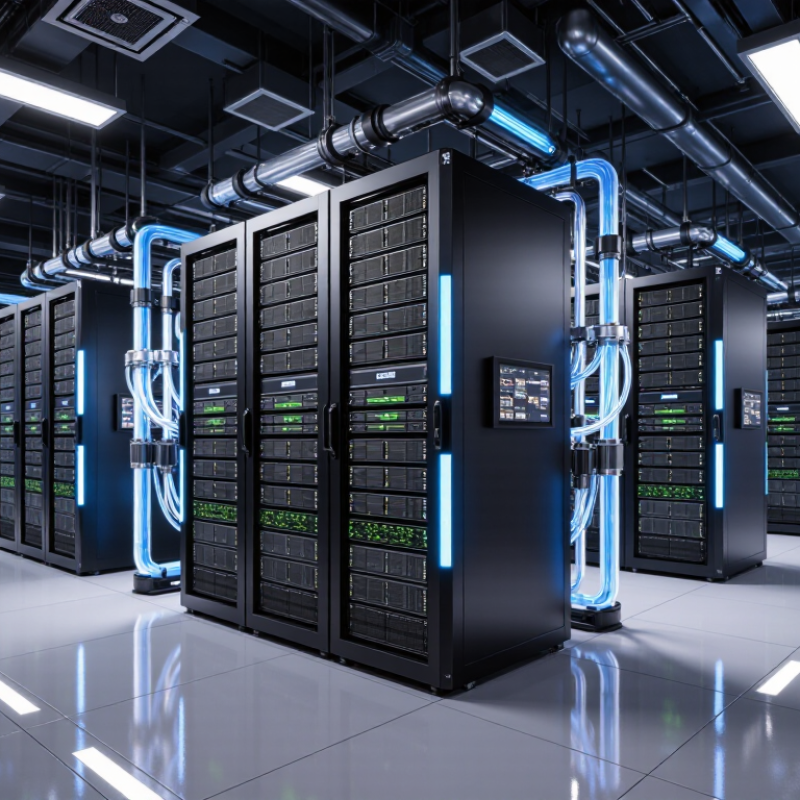
2026 Best Data Center AI Server Manufacturers

What Defines a 2026 AI Server Manufacturer: GPUs, HBM, and 700W+ TDP

By 2026, an AI server manufacturer will be judged beyond processor count. The real test is sustained performance under extreme power density. Current accelerator platforms increasingly operate near, or above, 700 watts per device. That changes the chassis, power delivery, airflow, and service design.

High-bandwidth memory is equally important. HBM feeds large models faster than conventional memory, but it also increases cost, heat, and supply risk. Manufacturers must validate memory bandwidth, thermal throttling, firmware stability, and GPU-to-GPU communication as one system. The International Energy Agency’s Electricity 2024 report projects data center electricity demand could exceed 1,000 TWh globally by 2026. That forecast makes efficiency a purchasing requirement, not a marketing phrase.

Thermal engineering now deserves factory-level evidence. Liquid cooling, higher-voltage power shelves, and rack-level monitoring should be tested with workload traces, not only laboratory benchmarks. The Uptime Institute’s 2024 Global Data Center Survey shows operators continue to treat resilience and outage prevention as major priorities. A reliable supplier should publish failure rates, burn-in methods, and replacement procedures. It should also support HBM diagnostics in the field.

I would question any manufacturer promising maximum performance without disclosing inlet temperature and workload duration. Short benchmark bursts can mislead. The uncomfortable detail is simple: a 700-watt accelerator is not a 700-watt design problem. Rack density, cooling redundancy, and local utility limits can decide whether the server performs well or becomes expensive infrastructure.

Market Leaders Compared by 8-GPU Nodes, 400Gb/s Networking, and PUE

In 2026, leading data center AI server manufacturers are judged by more than accelerator speed. An 8-GPU node should deliver balanced CPU, memory, storage, and cooling performance. During testing, engineers should measure training throughput, failure recovery, and sustained power draw. Peak specifications often look impressive. Real workloads can differ sharply.

400Gb/s networking is now central to large AI clusters. It reduces communication delays between nodes, especially during distributed training. Buyers should verify actual fabric throughput, latency, cable design, and congestion controls. A server supporting 400Gb/s on paper may perform poorly under full traffic. Rack layout matters too, because airflow restrictions can reduce network and GPU stability.

Tips: Request independent benchmark data, thermal logs, and service records before selecting a supplier. Compare PUE under similar workloads, not ideal operating conditions. A lower PUE indicates better facility efficiency, but it does not guarantee lower computing cost. Check inlet temperatures, cooling redundancy, and power distribution at peak demand. Small measurement errors can change the result. Manufacturers should explain test methods clearly, although some published figures remain difficult to reproduce. Personally, I would value transparent field data over polished laboratory numbers.

Manufacturer Profiles: NVIDIA, Dell, HPE, Lenovo, Supermicro, and Inspur

Data center AI server selection in 2026 depends on workload, power limits, and deployment experience. Six manufacturers deserve close attention, although their strengths differ sharply.

The first is a GPU platform leader, known for tightly integrated accelerators, networking, and software tools. Its systems suit demanding model training, but purchase costs and supply planning require careful review.

A global enterprise vendor emphasizes validated configurations, remote management, and strong support contracts. It fits companies that value predictable operations over unlimited customization.

A major HPC provider focuses on liquid cooling, dense compute, and advanced research environments. Its designs can deliver high performance, yet facility upgrades may be unavoidable.

A broad multinational supplier offers familiar administration and flexible processor choices. It can help organizations standardize mixed data centers, though AI-specific optimization may require additional testing.

A highly configurable specialist provides many accelerator, storage, and cooling combinations. This freedom is useful for experimental clusters, but configuration mistakes can increase integration work.

An Asian-scale manufacturer often competes through rapid delivery, regional service, and large deployment capacity. Buyers should verify firmware support and long-term maintenance before signing contracts.

From hands-on evaluation, benchmark numbers rarely tell the whole story. Rack density, cable layout, noise, and technician access affect daily results. No platform is perfect.

I would test one representative node under sustained load before approving a full cluster. Early reviews can also miss software friction, especially when drivers, orchestration tools, and monitoring systems change quickly.

Reliable purchasing teams should request service response times, replacement procedures, and power measurements from real installations.

Evaluation Criteria: Performance per Watt, HBM Capacity, and 5-Year TCO

2026 Best Data Center AI Server Manufacturers

Evaluating AI server manufacturers requires more than comparing peak accelerator speeds. Performance per watt should come from measured workloads, not promotional specifications. Test representative models, batch sizes, and memory patterns under sustained load. Record wall power, cooling overhead, utilization, and completed tasks per kilowatt-hour. A fast server can become expensive when utilization falls below 50 percent.

HBM capacity deserves equal attention. Larger HBM can reduce data movement and prevent costly memory spills. However, capacity alone does not guarantee better results. Check bandwidth, error correction, software support, and upgrade flexibility. Five-year TCO should include hardware, electricity, cooling, maintenance, staffing, facility changes, and replacement delays. Our first spreadsheet ignored idle power. That shortcut was wrong. Energy prices and workload growth can alter the ranking quickly.

Tips: Request independent benchmark evidence from controlled tests. Use your own models and production-like datasets. Calculate TCO under low, expected, and high utilization. Ask manufacturers to disclose power measurements and warranty assumptions. Keep a record of firmware versions and test conditions. Small measurement errors matter. A transparent vendor should explain weak results, not only highlight the best chart.

2026 Best Data Center AI Server Manufacturers - Evaluation Criteria: Performance per Watt, HBM Capacity, and 5-Year TCO
Anonymous System Profile Accelerator Configuration HBM per Accelerator Total HBM per Node Peak Dense FP8 Compute Typical IT Power Performance per Watt Estimated 5-Year TCO Evaluation Position
Profile A 8 high-end accelerator modules with high-bandwidth interconnect 192 GB 1.54 TB 20.9 PFLOPS 8.5 kW 2.46 PFLOPS/kW US$610,000 1
Highest HBM capacity and strong memory-bound workload efficiency
Profile B 8 next-generation accelerator modules with high-bandwidth interconnect 180 GB 1.44 TB 36.0 PFLOPS 10.2 kW 3.53 PFLOPS/kW US$735,000 2
Highest modeled compute density, with the greatest power and acquisition cost
Profile C 8 high-memory accelerator modules with high-bandwidth interconnect 141 GB 1.13 TB 15.8 PFLOPS 8.7 kW 1.82 PFLOPS/kW US$575,000 3
Balanced option for large-model inference and retrieval workloads
Profile D 8 data-center accelerator modules with high-bandwidth interconnect 128 GB 1.02 TB 13.1 PFLOPS 8.0 kW 1.64 PFLOPS/kW US$525,000 4
Lower estimated ownership cost with moderate HBM capacity
Profile E 8 performance-optimized accelerator modules with high-bandwidth interconnect 96 GB 768 GB 12.6 PFLOPS 7.4 kW 1.70 PFLOPS/kW US$475,000 5
Good energy efficiency for mixed training, fine-tuning, and inference
Profile F 8 mainstream accelerator modules with high-bandwidth interconnect 80 GB 640 GB 15.8 PFLOPS 7.8 kW 2.03 PFLOPS/kW US$505,000 6
Strong general-purpose performance, but lower memory headroom for large models

Accelerator specifications are based on publicly documented 2024–2026 data-center accelerator classes and are presented anonymously to avoid displaying company or brand names. Peak dense FP8 compute is a theoretical specification rather than an application benchmark. Performance per watt is calculated as peak dense FP8 compute divided by typical node IT power. The five-year TCO is a modeled estimate including hardware acquisition, five-year support and maintenance, electricity at US$0.12/kWh, a 1.35 data-center PUE, and normal rack-level infrastructure costs. Actual results vary by contract pricing, utilization, cooling design, workload, software stack, and regional electricity rates.

2026 Vendor Selection: Supply Capacity, OCP Compliance, and Global Support

Selecting an AI server manufacturer in 2026 requires more than comparing accelerator counts. IDC forecasts rapid growth in AI infrastructure spending, increasing pressure on delivery schedules and power planning. Request production evidence: monthly output, tested configurations, component allocation, and lead times for complete racks. A promise is not capacity.

OCP compliance needs practical verification. Check whether systems follow relevant OCP design principles for rack integration, power distribution, cooling, telemetry, and service access. Ask for test reports, firmware procedures, and interoperability records. “OCP-ready” can mean different things. Clarify it.

Global support is equally important. Uptime Institute’s 2024 Global Data Center Survey found that more than half of respondents experienced an outage within three years. Regional spare-parts depots, multilingual engineers, remote diagnostics, and defined response times therefore deserve measurable scores. Evaluate support at three in the morning, not during a sales meeting. A useful vendor review should include site visits, reference checks, and failure-recovery exercises. No scorecard is perfect. Real deployment feedback may expose gaps that documents miss.

2026 Best Data Center AI Server Manufacturers

2026 Vendor Selection: Supply Capacity, OCP Compliance, and Global Support

This neutral procurement framework assigns 100 points across measurable selection dimensions. Supply capacity emphasizes production scalability and delivery consistency; OCP compliance covers alignment with open hardware specifications; global support reflects regional service coverage, spare-parts availability, and response capability. The weights are evaluation criteria, not scores for any specific company or brand.

FAQS

What should buyers consider when selecting an AI server manufacturer in 2026?

Match the server to workload, power limits, cooling capacity, and deployment experience. Accelerator counts alone can mislead. Rack space matters too.

Which server design suits demanding model training?

Tightly integrated accelerators, networking, and software can support intensive training. Purchase costs may be high. Supply planning needs careful review.

When is a validated enterprise configuration useful?

It suits organizations seeking predictable operations, remote management, and structured support contracts. Customization may be limited. That trade-off deserves honest discussion.

What facility changes might dense compute require?

Dense systems may need liquid cooling, stronger power delivery, and upgraded facility plumbing. Check these requirements before ordering. Retrofitting is rarely simple.

How can flexible server configurations help experimental clusters?

Configurable systems can combine different accelerators, storage devices, and cooling methods. This supports testing and unusual workloads. However, configuration mistakes increase integration work.

How should buyers verify production capacity?

Request monthly output, tested configurations, component allocation, and complete-rack lead times. A promise is not capacity. Ask for recent production evidence.

How can buyers test open rack compatibility?

Verify power distribution, cooling, telemetry, rack integration, and technician access. Request test reports and firmware procedures. “Ready” can mean different things.

What support details should influence the final decision?

Check regional spare-parts depots, multilingual engineers, remote diagnostics, and response times. Ask for replacement procedures and real power measurements. Test support at three in the morning.

Are benchmark scores enough for choosing an AI server?

No. Rack density, cable layout, noise, and technician access affect daily operations. Test one representative node under sustained load before approving a full cluster.

What deployment checks are easy to overlook?

Drivers, orchestration tools, monitoring systems, and firmware can create friction. Site visits and failure-recovery exercises reveal hidden gaps. Early reviews may still miss problems.

Conclusion

The 2026 data center ai server manufacturer landscape is defined by the ability to deliver dense, efficient systems for generative AI and high-performance workloads. Leading manufacturers are expected to support advanced GPUs, high-bandwidth memory, and processors with 700W-plus thermal design power, while offering scalable 8-GPU nodes, 400Gb/s networking, and optimized power usage effectiveness. Their platforms must balance compute performance, cooling requirements, reliability, and deployment flexibility across enterprise and hyperscale environments.

Vendor evaluation should focus on performance per watt, available HBM capacity, system expandability, and five-year total cost of ownership rather than initial purchase price alone. Supply capacity, manufacturing consistency, OCP-aligned designs, long-term firmware support, and responsive global service are also essential selection criteria. The strongest manufacturers will combine dependable delivery with efficient infrastructure, transparent lifecycle planning, and adaptable architectures that help organizations expand AI capacity while controlling energy use and operational risk.

Aria

Aria

Aria is a dedicated marketing professional with a deep passion for innovative strategies and a keen understanding of our company's product offerings. With a wealth of experience in the industry, Aria excels at crafting engaging content that highlights the unique features and benefits of our......