Bexora
As the demand for advanced technology grows, the AI server supplier industry is evolving rapidly. In 2026, businesses must choose the right suppliers to stay competitive. Expert Dr. Lisa Chen, a leading voice in AI infrastructure, emphasizes, "Selecting the right AI server supplier can determine the success of your technological investments."
These suppliers play a crucial role in supporting machine learning and data processing needs. Companies look for reliability and scalability as key factors. Major players in the market are continuously innovating to meet these requirements. However, some suppliers may not provide the needed support or partnership for long-term growth.
Choosing an AI server supplier is not just a business decision; it’s a strategic move. Consideration of performance, customer service, and adaptability is vital. As companies navigate their options, they must reflect on past experiences and challenge their assumptions about what makes an ideal supplier. In this rapidly changing landscape, understanding the nuances of the AI server supplier market will be essential for future success.
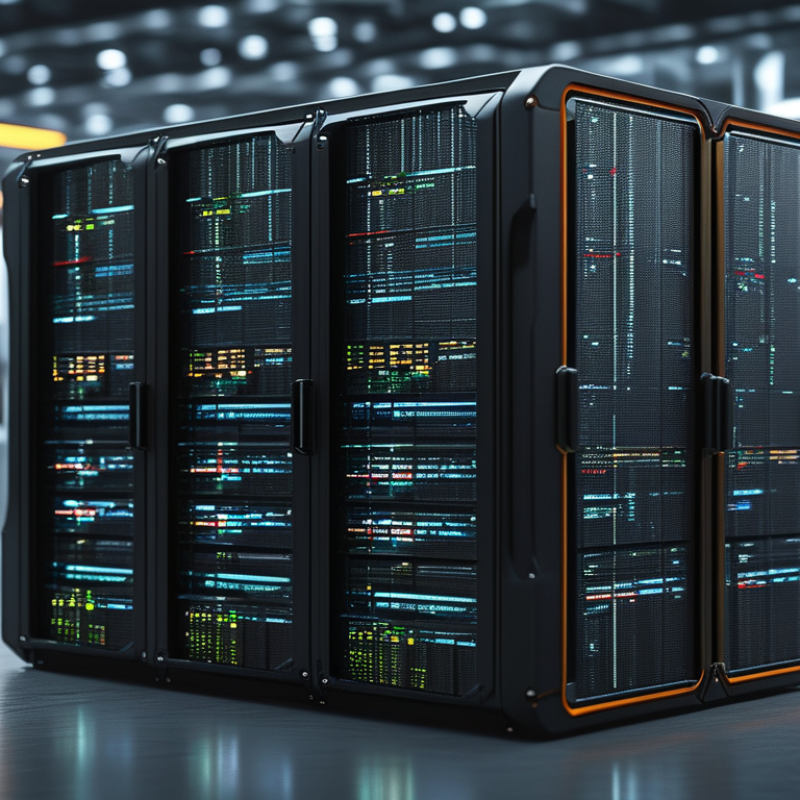
As the AI server market evolves in 2026, several key trends are emerging. The demand for higher processing power is increasing significantly. Companies are pushing their limits to enhance AI capabilities. This shift drives innovation in server architecture and design. Factors such as energy efficiency and cooling solutions are becoming critical. Organizations are seeking servers that not only perform but also conserve resources.
The landscape is competitive, with new entrants presenting unique features. These players challenge established providers by offering advanced technology at lower costs. However, reliability remains a crucial concern. Businesses need to ensure servers can handle workloads without failures. Companies may prioritize past experience over flashy advancements. Balancing innovation and reliability is key to long-term success.
Additionally, security is becoming a focal point. As AI grows, so do concerns about data protection. Servers must integrate robust security measures to prevent breaches. This has led to a more cautious approach in selecting server suppliers. Businesses are recommended to evaluate suppliers based on their track record of security and support. Investing time in research is essential for making informed decisions.
| Supplier Name | Market Share (%) | Estimated Revenue ($ Billion) | Key Features |
|---|---|---|---|
| Supplier A | 25 | 5.0 | High performance, scalable architecture |
| Supplier B | 20 | 4.2 | AI optimization, energy-efficient |
| Supplier C | 15 | 3.0 | Integrated security, cloud compatibility |
| Supplier D | 10 | 2.5 | Cost-effective, customizable solutions |
| Supplier E | 30 | 6.0 | Advanced AI features, robust support |
When considering AI servers, key features significantly impact performance and reliability. Look for high-performance processors, as they determine how efficiently AI algorithms run.
Multi-core CPUs can handle numerous tasks simultaneously. Furthermore, ample RAM enhances data processing speed and enables seamless multitasking.
Storage capabilities are equally vital. Opt for servers with solid-state drives rather than traditional hard drives. SSDs provide faster data access, crucial for AI applications. Additionally, ensure the server has sufficient bandwidth to manage large datasets. Inadequate bandwidth can hinder processing power and slow down AI computations.
Lastly, consider scalability. As AI technologies evolve, the server should adapt to future needs. Flexibility in adding more powerful components ensures longevity. Reflect on your current and future requirements before making a choice. Balancing immediate needs with potential growth is crucial in this rapidly changing field.
In the rapidly evolving landscape of AI, several server suppliers stand out for their innovative offerings. These companies understand the critical needs for processing power and efficiency. They provide hardware that can handle complex AI algorithms. Models with high memory capacity and advanced cooling systems are now essential. Many servers incorporate AI-optimized chips, enhancing data processing speed significantly.
Some suppliers focus on scalable solutions. This flexibility allows businesses to expand their infrastructure as their needs grow. Customization is key in today's market. Companies seek servers that align with their specific workloads. The ability to adapt and modify hardware configurations ensures optimal performance. However, balancing cost and performance remains a challenge for many.
Additionally, the sustainability of server operations is becoming a pressing concern. Suppliers are innovating to reduce energy consumption. This shift is crucial for organizations aiming for greener practices. Yet, tracking the effectiveness of these efforts can be tricky. The landscape is filled with options, but it can be overwhelming to assess which supplier meets all needs. Continuously evaluating performance versus cost is essential for success.
This bar chart illustrates the projected server sales volume (in millions) for leading AI server suppliers in 2026, focusing on key attributes like performance and scalability.
When evaluating AI server suppliers in 2026, performance and pricing will be essential factors. The rapidly evolving landscape demands that businesses focus on specifications like processing power, memory speed, and energy efficiency. Potential users must analyze benchmark tests from various sources. This data reveals how different models perform under similar workloads. Real-world performance may differ from vendor claims. Such differences can impact overall system effectiveness.
Pricing structures can be equally complex. Many suppliers offer tiered pricing, creating a challenge in finding the best deal. Hidden costs may lurk in support or software licensing models. An in-depth review of total cost of ownership provides insight beyond the initial purchase price. Users should also account for long-term support agreements and potential upgrade costs.
Investing in the right AI server is crucial, but it’s not solely an operational decision. It requires a balance between budget and the expected performance outcome. Iterating through trials and monitoring metrics contributes to informed choices. A well-rounded analysis leads to better decisions.
As we approach 2026, the landscape of AI server technology is continually evolving. A recent report from MarketsandMarkets anticipates the AI server market will reach $30 billion by 2026, driven by surging demand for machine learning and big data applications. This growth is accompanied by advancements in hardware, particularly in GPU technology. GPUs are becoming critical for handling AI workloads, with developments allowing for more efficient processing of complex algorithms.
Supply chain dynamics are also shifting. A report from Gartner indicates that 75% of organizations planning to invest in AI infrastructure face supply chain disruptions. This highlights an urgent need for suppliers to enhance resilience and adaptability. Many are exploring alternative sourcing strategies. They aim to mitigate risks associated with semiconductor shortages.
Moreover, data from IDC suggests that enterprises will prioritize sustainability in their purchasing decisions. Energy-efficient servers are becoming attractive options as companies seek to lower their carbon footprints. This trend raises questions about the balance between performance and environmental impact. The future of AI servers is not only about technology but also about responsible consumption and ethical considerations.
I server market for 2026?
Reliability is crucial to ensure that servers can handle workloads without failures, impacting overall business performance.
Companies are increasingly cautious, prioritizing suppliers with proven security measures to protect sensitive data.
Look for high-performance processors, ample RAM, solid-state drives, and sufficient bandwidth for optimal performance.
GPUs enhance the efficiency of processing complex algorithms, making them essential for handling AI workloads.
Businesses should explore alternative sourcing strategies to mitigate risks from semiconductor shortages and ensure resilience.
Companies aim to reduce their carbon footprints, making energy-efficient servers a priority for ethical and environmental reasons.
The ability to add more powerful components as technology evolves is vital for long-term adaptability.
Inadequate bandwidth can restrict processing power and slow down computations, affecting the speed of AI applications.
Companies must balance immediate performance needs with long-term growth potential, ensuring future adaptability.
As the demand for AI technology continues to rise, the AI server market is expected to evolve significantly by 2026. Key features such as processing power, scalability, energy efficiency, and specialized hardware capabilities will be crucial when evaluating potential AI server suppliers. Organizations should prioritize these aspects to ensure optimal performance for their AI workloads.
Leading AI server suppliers will offer a range of solutions tailored to various business needs, allowing for a comparative analysis of performance and pricing. This will enable companies to select the best options based on their operational requirements. Furthermore, future trends in AI server technology will likely focus on enhanced integration of AI tools, improved supply chains, and innovative cooling solutions, setting the stage for a dynamic and competitive marketplace in the years to come.
