Bexora
Choosing the best ai server manufacturer in China requires more than comparing processor names or impressive performance figures. Buyers need evidence from real deployments, including rack density, cooling efficiency, firmware stability, and service response. A server that performs well in a laboratory may behave differently inside a crowded data center. That difference matters.
This article examines how leading Chinese manufacturers support artificial intelligence workloads, from model training to large-scale inference. It considers GPU compatibility, high-speed networking, storage design, power consumption, and long-term maintenance. Practical details matter here. An eight-GPU server may deliver excellent results, yet poor airflow can reduce sustained performance. Liquid cooling may improve density, but it can also increase installation complexity. Reliable manufacturers should provide clear specifications, documented testing, qualified engineers, and responsive warranty support.
There is no universal winner.
The right choice depends on workload size, budget, data-center conditions, and procurement requirements. Established companies such as Inspur, H3C, Lenovo, and Huawei may offer different strengths, but brand recognition alone cannot prove technical superiority. Independent benchmarks, customer references, security reviews, and total ownership costs deserve careful attention. Some published performance claims may use ideal configurations that few customers can reproduce. That is worth questioning. By comparing measurable capability with deployment experience, this guide aims to identify which supplier may genuinely deserve the title best ai server manufacturer for specific business needs, rather than offering an overly confident one-size-fits-all answer.
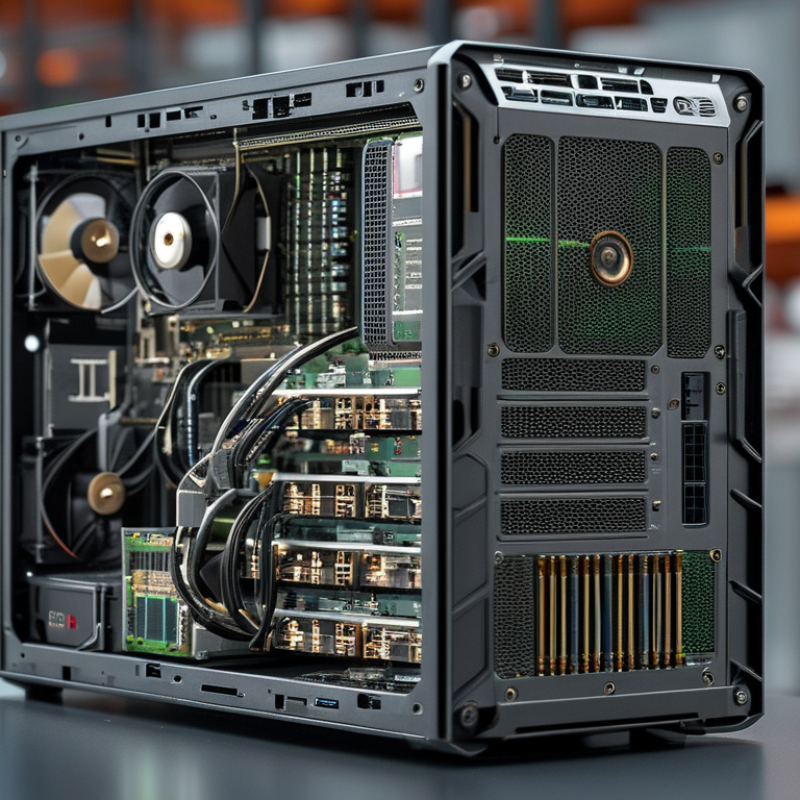
The best AI server manufacturer is not defined by a glossy specification sheet. It proves performance under real workloads. Experienced engineers test cooling, power delivery, memory stability, and accelerator compatibility before shipment. During factory evaluations, I look for burn-in racks, organized cable paths, and clear test records. Small details matter.
Strong manufacturers design systems for different AI tasks, including model training, inference, and data analysis. They should offer flexible configurations without treating customization as a simple parts swap. Thermal engineers must measure airflow at different rack positions. Power engineers should examine sudden load changes. These practical tests reveal weaknesses early.
Reliable production also depends on traceable components and consistent quality control. A professional supplier explains delivery schedules, firmware support, repair procedures, and spare-part availability in plain language. It should provide documented validation results, safety certifications, and data protection practices that match the customer’s region. After-sales engineers need to respond quickly, not disappear after installation. That happens sometimes.
Energy efficiency deserves equal attention. A server that delivers high benchmark scores but wastes power can increase operating costs for years. Manufacturers should report performance using realistic workloads, not only ideal laboratory conditions. I also question impressive claims when testing methods remain unclear. No factory gets every choice right. The strongest one admits limitations, improves its process, and builds dependable systems through measurable engineering rather than confident promises.
China’s leading AI server manufacturers compete on more than processor speed. IDC estimated China’s AI server market at about US$23.1 billion in 2023. That scale reflects strong demand from cloud platforms, research centers, and industrial laboratories. However, market size does not identify the best supplier. Deployment evidence matters more.
Domestic manufacturers show three core strengths.
First, they can integrate accelerator cards, high-speed networking, and storage into dense systems.
Second, local engineering teams often adapt firmware and cooling designs for Chinese data centers. A rack may draw over 30 kilowatts, making liquid cooling, airflow planning, and power distribution practical tests.
Third, regional service coverage can shorten replacement times when a failed fan stops a training cluster. These details are less visible than benchmark scores.
Omdia’s server research highlights continued investment in accelerated computing, while Uptime Institute reports rising concern about data-center power and cooling efficiency. Buyers should therefore compare performance per watt, sustained workload results, and maintenance response times. Ask for failure-rate data.
No ranking is perfect. Public reports may combine different server definitions, and vendor-reported benchmarks can favor selected workloads. My assessment is cautious: the strongest manufacturer is the one that delivers stable cluster operation, transparent testing, and dependable support after installation. A cheaper system can become expensive when engineers lose two days diagnosing an interconnect fault.
Who Is the Best AI Server Manufacturer in China?
China’s strongest AI server manufacturers compete through engineering depth, not appearance. Their systems combine accelerator modules, high-bandwidth memory, PCIe 5.0, and 400Gbps networking. These technologies reduce data-transfer delays during model training. TrendForce estimated global AI server shipments would reach about 1.67 million units in 2024, showing intense demand for scalable designs. China’s manufacturers increasingly use modular motherboards and software-defined monitoring to simplify maintenance in large data centers.
Cooling is equally important. Direct-to-chip liquid cooling removes heat more efficiently than traditional air systems. The International Energy Agency reported that data centers consumed about 460 TWh of electricity in 2022 and may exceed 1,000 TWh by 2026. This pressure makes pump control, cold-plate design, and leak detection practical priorities. Uptime Institute research also shows that cooling can represent a significant share of data-center energy use, depending on climate and facility design.
Reliability needs evidence.
Professional manufacturers test servers under sustained workloads, vibration, dust, and repeated power changes. They also track firmware behavior through telemetry and maintain clear component traceability. Yet weaknesses remain. Liquid cooling adds plumbing complexity, while high-speed interconnects can expose software compatibility problems. The best evaluation should examine thermal stability, repair time, workload performance, and energy use together. A fast benchmark alone is not enough.
Key Technologies Used in China’s AI Server Manufacturing
The chart compares representative peak data-transfer rates of major technologies used in modern AI servers. High-bandwidth memory, PCIe expansion, high-speed Ethernet, and DDR5 memory work together to improve accelerator access, model-training throughput, and cluster scalability. Values are based on commonly published industry specifications rather than individual company or brand data.
Reference specifications: JEDEC DDR5-4800, PCI-SIG PCIe 5.0 x16, IEEE 802.3 400GbE, and JEDEC HBM3.
Who Is the Best AI Server Manufacturer in China?
How to Compare AI Server Manufacturers in China
Comparing AI server manufacturers requires more than checking processor counts or quoted prices. Examine their experience with real workloads, including model training, inference, and high-performance computing. Ask for test results using your preferred software and dataset size. A reliable supplier should explain power draw, cooling limits, memory expansion, and network performance clearly. Avoid impressive claims without measurable evidence.
Inspect the hardware details closely. Check GPU compatibility, storage options, redundant power supplies, and airflow design. A server running beside you should not sound like a workshop machine. Request thermal test records from sustained workloads, not short demonstrations. Confirm component traceability, factory quality controls, and relevant safety certifications. Service matters too. Review response times, spare-parts availability, remote diagnostics, and warranty coverage in your region.
A useful comparison table can score performance, stability, support, delivery, and total operating cost. Keep the scoring transparent. No table is perfect. Some buyers overvalue benchmark speed and overlook electricity consumption. That mistake becomes expensive in a crowded data room. Ask whether engineers can reproduce reported results independently. Site visits, sample inspections, and reference conversations may reveal more than polished presentations. I would also leave room for uncertainty, because early estimates often change after deployment. A manufacturer that admits limitations may deserve more trust than one promising everything.
The best AI server manufacturer should be evaluated through verifiable engineering, delivery, support, and compliance data rather than price alone. The following table provides a practical comparison framework using measurable industry criteria.
| Comparison Dimension | Relevant Data or Industry Reference | What a Strong Manufacturer Should Demonstrate | Recommended Verification Method |
|---|---|---|---|
| AI Accelerator Capacity | Common enterprise AI server configurations support 4 or 8 double-width accelerator cards in a 4U or 8U chassis. | A clear GPU, accelerator, thermal, and power compatibility list for each chassis model. | Review the official datasheet, layout drawing, and validated configuration list. |
| CPU and Memory Expansion | Dual-socket server platforms commonly provide 16 to 24 DIMM slots and support high-capacity DDR5 memory, depending on the platform. | The supplier states maximum memory capacity, supported memory speed, NUMA layout, and upgrade limitations. | Check the platform technical manual and request a populated memory configuration. |
| Power Supply Capacity | AI servers with multiple accelerators may require approximately 3,000 W to more than 10,000 W, depending on the accelerator type and system design. | Redundant hot-swap power supplies, documented load limits, and power-cord compatibility for the target market. | Request a system power budget at idle, typical load, and maximum validated load. |
| Power Efficiency | 80 PLUS Titanium power supplies can achieve up to 96% efficiency at 50% rated load under the certification test conditions. | The manufacturer provides power-supply certification information and realistic system-level consumption data. | Distinguish power-supply efficiency from total server efficiency and request test conditions. |
| Cooling Design | High-density air-cooled systems may require approximately 30 kW to 40 kW of rack-level cooling capacity, while higher-density deployments may require liquid cooling. | The supplier provides airflow direction, fan redundancy, operating temperature range, and liquid-cooling options where required. | Review thermal test reports and confirm compatibility with the data-center cooling design. |
| Networking Capability | AI clusters commonly use 100 Gb/s, 200 Gb/s, or 400 Gb/s network links, depending on scale and interconnect requirements. | Validated network adapters, PCIe lane allocation, cable compatibility, and cluster fabric support are clearly documented. | Ask for a network topology diagram and confirm measured throughput in a representative configuration. |
| Storage and Local Data Path | AI servers may combine NVMe solid-state drives for local datasets, operating systems, and cache with external shared storage. | The supplier specifies drive-bay count, PCIe generation, RAID options, boot-device redundancy, and serviceability. | Compare storage backplane diagrams and request sequential and random I/O test results. |
| Operating Temperature | Many enterprise server specifications use an operating range around 10°C to 35°C, although the exact range varies by system and configuration. | Environmental limits are provided for the fully populated AI configuration rather than only for the basic server. | Check the environmental specification and any altitude, humidity, or derating requirements. |
| Management and Monitoring | Modern enterprise servers generally include out-of-band management, hardware monitoring, remote console access, and firmware management. | Management functions support alerting, audit logs, remote power control, firmware updates, and standard management protocols. | Request a live management-console demonstration and a supported software integration list. |
| Reliability and Serviceability | Hot-swap fans, drives, and power supplies can reduce maintenance downtime when supported by the complete system design. | The manufacturer supplies failure-replacement procedures, spare-part availability, and clear mean-time-to-repair targets. | Review the service manual and obtain a written spare-parts and escalation policy. |
| Testing and Validation | A complete AI server should be tested for boot stability, accelerator detection, thermal behavior, power draw, memory errors, and network performance. | The supplier provides factory test records and can support customer acceptance testing before shipment. | Use a signed acceptance checklist with measurable pass/fail criteria. |
| Compliance Documentation | Depending on the destination, buyers may require documents related to electrical safety, electromagnetic compatibility, environmental compliance, and product conformity. | Certificates and declarations apply to the actual model and configuration being purchased. | Verify certificate numbers, issuing bodies, validity, and model correspondence. |
| Lead Time and Production Capacity | Actual lead time depends on accelerator availability, memory, storage, power supplies, production scheduling, and import requirements. | The manufacturer provides a component-based delivery schedule instead of an unsupported single delivery promise. | Request a bill of materials, production milestones, and shipment schedule in writing. |
| Warranty and After-Sales Support | Enterprise warranty periods commonly range from one to three years, with optional extensions and different on-site response levels. | Warranty terms define response time, replacement procedure, exclusions, remote support, and cross-border service responsibilities. | Compare the written warranty, service-level agreement, and local support arrangements. |
| Total Cost of Ownership | Total cost includes hardware, shipping, customs, electricity, cooling, software support, spare parts, maintenance, and downtime risk. | The supplier can provide a transparent quotation with separately listed components and service costs. | Calculate three- to five-year ownership cost using the expected utilization rate and local energy price. |
| Evaluation Area | Suggested Weight | Evaluation Focus |
|---|---|---|
| Technical Compatibility | 25% | Accelerator support, CPU, memory, PCIe lanes, storage, networking, and cooling. |
| Reliability and Validation | 20% | Factory testing, thermal stability, redundancy, serviceability, and acceptance testing. |
| Performance per Dollar | 15% | Measured workload performance, power consumption, and total acquisition cost. |
| Delivery Capability | 15% | Component availability, production capacity, lead time, packaging, and logistics execution. |
| Warranty and Support | 15% | Response time, spare parts, remote assistance, local service, and escalation process. |
| Compliance and Documentation | 10% | Product certificates, technical manuals, configuration records, and contractual transparency. |
A reliable comparison should use the same accelerator configuration, workload, power assumptions, warranty period, delivery terms, and support requirements for every supplier. The highest score should go to the manufacturer that provides the strongest verified value for the intended deployment—not necessarily the lowest initial price.
The best manufacturer depends on your workload, not a universal ranking. AI training requires dense GPU capacity, fast interconnects, and reliable cooling. For inference, prioritize latency, energy efficiency, and compact rack designs. A computer vision factory may need rugged edge servers, while a research lab needs flexible configurations. Define these conditions before comparing quotations.
During supplier assessments, request detailed thermal tests, power figures, component compatibility lists, and failure-rate data. Ask whether engineers can adjust BIOS settings, storage layouts, and accelerator configurations. Check production traceability, burn-in procedures, warranty terms, and replacement response times. Certification records matter, but practical support matters more. Speak with current users when possible. Their maintenance experience often reveals hidden delays.
Price can mislead. A lower quote may exclude rails, networking, software validation, or spare parts. A premium chassis may waste budget for a small inference cluster. No supplier is perfect. One overlooked issue is acoustic noise in office-based deployments. Another is export documentation, which can slow delivery across regions. I would score technical fit, delivery consistency, service depth, and upgrade potential separately. Then test a sample server under realistic workloads before placing a large order.
I server manufacturer in China?
The system should handle model training, inference, and data analysis. Ask for results using your software and expected dataset size. Short demonstrations can hide weaknesses.
Request sustained thermal test records from realistic workloads. Check airflow across different rack positions. A dense rack may draw over 30 kilowatts, requiring careful power planning.
Review accelerator compatibility, memory expansion, storage options, networking, and redundant power supplies. Inspect cable paths and component traceability. A noisy server may signal poor airflow planning.
High benchmark scores can hide years of unnecessary electricity costs. Compare performance per watt during sustained workloads. Ideal laboratory results are not enough.
Look for burn-in racks, organized testing areas, and clear validation records. Ask whether engineers can reproduce reported results independently. Factory claims need evidence.
Confirm response times, remote diagnostics, spare-part availability, repair procedures, and regional warranty coverage. Engineers should remain available after installation. That does not always happen.
Use a transparent scorecard covering performance, stability, support, delivery, and operating cost. Include site visits, sample inspections, and customer references when possible. No scorecard is perfect. Early estimates may change after deployment.
Not automatically. A cheaper server can become costly after downtime, difficult repairs, or inefficient power use. I may still overvalue benchmark speed. Leave room for uncertainty.
Determining the best ai server manufacturer in China requires more than comparing prices or product specifications. A strong manufacturer should demonstrate reliable engineering, stable supply capacity, strict quality control, responsive technical support, and the ability to customize systems for different workloads. Leading manufacturers typically build their strengths around high-performance computing, efficient thermal management, scalable architecture, energy optimization, and dependable integration services. Their solutions may support artificial intelligence training, inference, cloud computing, data analysis, and enterprise applications while maintaining consistent performance under demanding conditions.
When comparing Chinese AI server manufacturers, buyers should evaluate processor and accelerator compatibility, memory and storage options, networking capabilities, system expandability, testing standards, delivery efficiency, warranty coverage, and long-term service. The right choice depends on specific requirements: research users may prioritize maximum computing performance, enterprises may focus on security and manageability, and growing businesses may need flexible configurations and cost control. A careful assessment of technology, customization, reliability, and support can help organizations select a suitable partner for their present needs and future development.
