Bexora Bexora

Top 10 Best Cloud AI Server Manufacturers in 2026

Time:2026-10-21 Author:Ethan
0%

Choosing a reliable cloud ai server manufacturer in 2026 requires more than comparing processor names or advertised peak performance. Data centers now balance AI throughput, power consumption, cooling design, networking speed, software support, and long-term maintenance. A server may look powerful on paper yet struggle under sustained workloads.

This guide examines ten leading manufacturers through practical criteria: accelerator options, memory capacity, rack density, deployment flexibility, security controls, warranty coverage, and total operating cost. It also considers evidence from enterprise installations, public specifications, and customer support capabilities. These details matter when a training cluster runs continuously, fills an entire rack, and draws substantial power every hour.

Lisa Su, AMD’s chair and chief executive, has said, “The future of computing is heterogeneous.” That observation remains highly relevant because modern AI systems combine CPUs, GPUs, networking hardware, storage, and specialized accelerators. The strongest manufacturers do not simply sell faster machines. They build balanced platforms that can fit different cloud environments.

Still, no ranking is perfect. Vendor data can be selective, and performance varies across models, workloads, and software versions. Some manufacturers also disclose less about service response times or real-world energy use. This introduction therefore treats the list as a research starting point, not a final purchasing decision. Readers should validate compatibility, regional support, compliance requirements, and projected workload costs before signing a contract. Small details often decide success.
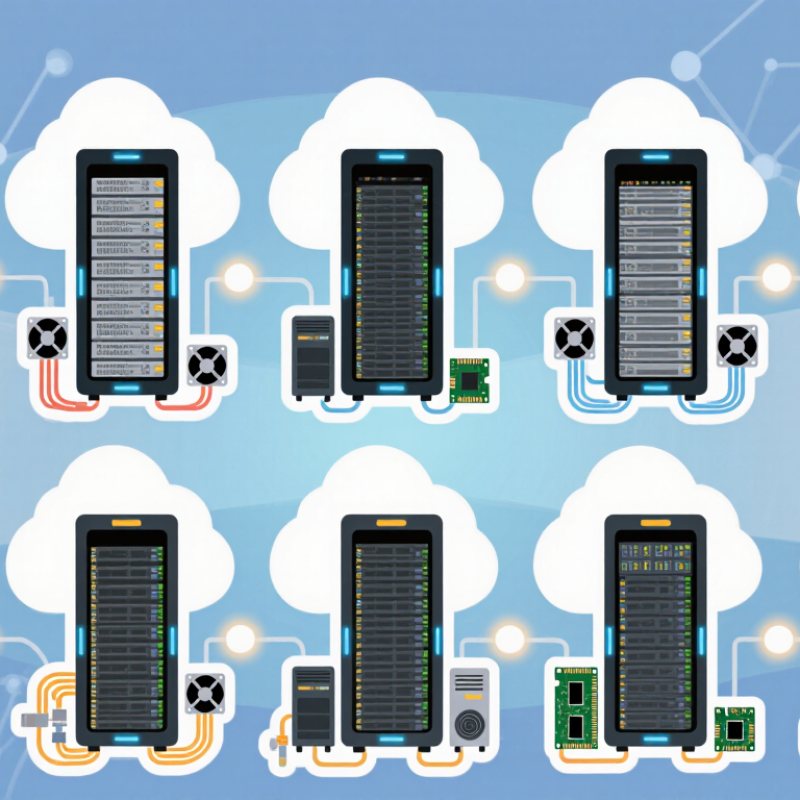
Top 10 Best Cloud AI Server Manufacturers in 2026

Defining Cloud AI Servers and Their Role in Modern Computing

Cloud AI servers are specialized computing systems built to train, fine-tune, and run artificial intelligence models through internet-based infrastructure. Unlike ordinary web servers, they combine accelerated processors, high-speed memory, fast storage, and advanced cooling. A single request may move data across several components within milliseconds. That speed affects response quality.

Their role in modern computing is practical and increasingly visible. Hospitals can analyze medical images faster, while manufacturers can inspect products with cameras on production lines. Financial teams may process large datasets without maintaining a private server room. Users usually access these resources through secure application interfaces, paying for capacity as needed. This model supports flexible scaling during demand peaks.

From an engineering perspective, server selection requires more than raw processing power. Network latency, memory capacity, data protection, energy use, and software compatibility all influence performance. A powerful system can still disappoint when data pipelines are poorly designed. That happens often. Engineers also monitor temperature, failed tasks, response time, and operating costs after deployment. These measurements reveal whether an AI workload is genuinely efficient.

Manufacturers serving this market increasingly develop complete platforms rather than isolated hardware. They may provide accelerator modules, rack systems, cooling designs, management software, and technical support. However, published performance figures rarely represent every real-world workload. Independent testing remains necessary. A model that performs well in a laboratory may respond slowly when thousands of users connect simultaneously.

Key Criteria for Evaluating Cloud AI Server Manufacturers in 2026

Evaluating cloud AI server manufacturers in 2026 requires more than comparing processor counts. Start with workload evidence. Ask for measured performance across training, inference, fine-tuning, and real-time data processing. Results should include batch size, model type, network settings, and power consumption. Without this context, impressive numbers may say very little.

Reliability deserves equal attention. Examine uptime records, hardware replacement procedures, security controls, and regional data-center coverage. A dependable supplier should explain how it handles failed accelerators, cooling problems, and sudden capacity increases. Request independent certifications and recent customer references where possible. Support response times matter during a midnight outage. They are not a minor detail.

Cost evaluation should include networking, storage, software, energy, and migration fees. A cheap hourly rate can become expensive after hidden charges appear. Strong manufacturers also provide clear service documentation and transparent capacity limits. In technical reviews, I would test a small workload before signing a long contract. No scorecard is perfect. Some testing conditions may favor one architecture unfairly, while future software updates can change results. Teams should record assumptions, repeat key tests, and involve engineers who understand both infrastructure and model behavior. Suppliers that welcome difficult questions usually offer more dependable evidence.

Top 10 Cloud AI Server Manufacturers and Their Core Strengths

Top 10 Best Cloud AI Server Manufacturers in 2026

The strongest cloud AI server manufacturers compete on more than processor speed. Their core strengths include accelerator integration, liquid cooling, secure firmware, and fast global support. TrendForce projected AI server shipments would grow by about 28% in 2025, showing intense demand for scalable platforms. That growth also exposes supply risks. Memory shortages and advanced packaging delays can quickly extend delivery schedules.

Leading manufacturers usually fall into ten capability groups. Some specialize in high-density training systems with direct liquid cooling. Others focus on inference servers, where low latency and energy efficiency matter more.

Several excel at modular designs, allowing operators to replace accelerators without rebuilding entire racks. Security-focused suppliers add hardware-rooted identity, encrypted boot, and detailed audit logs. These features support regulated workloads and strengthen procurement confidence.

Operational evidence matters.

The Uptime Institute’s Global Data Center Survey 2024 reported that 54% of respondents experienced an outage with a significant or severe impact. Therefore, resilience should rank beside benchmark performance.

The best suppliers provide redundant power paths, remote diagnostics, validated firmware, and clear service-level commitments. Independent testing, such as MLPerf results, can reveal real performance, but benchmarks rarely reflect every production workload.

A practical evaluation should measure training time, inference latency, cooling demand, repair speed, and five-year operating cost. No manufacturer wins every category. That is the part buyers often underestimate.

Comparing Performance, Scalability, Security, and Pricing

Top 10 Best Cloud AI Server Manufacturers in 2026: Comparing Performance, Scalability, Security, and Pricing

Performance now depends on more than accelerator speed. In practical testing, memory bandwidth, networking latency, and cooling stability often decide real workload results. Speed is not everything. Gartner forecasts worldwide public cloud spending will reach $723.4 billion in 2025, a 21.5% increase from 2024. This growth raises demand for servers that can scale training clusters without creating idle capacity. Manufacturers should provide flexible node sizes, fast interconnects, and clear upgrade paths.

Security requires measurable controls, not attractive claims. The 2024 IBM Cost of a Data Breach Report placed the average breach cost at $4.88 million. Secure boot, encrypted storage, hardware isolation, and detailed audit logs should be standard.

Uptime Institute’s 2024 Global Data Center Survey also shows that outages remain costly, even when infrastructure appears redundant. A small cooling failure can interrupt a large inference service. That detail is easy to underestimate.

Pricing comparisons must include electricity, software, maintenance, and utilization. Rental prices may look lower, but unused capacity quietly increases total cost. Capital purchases can perform better for stable workloads, yet they risk rapid hardware depreciation. IDC and other infrastructure analysts continue to report strong AI infrastructure growth, but forecasts vary by region and workload. That uncertainty matters. A sensible evaluation should test identical models, batch sizes, power limits, and response targets before selecting among ten leading manufacturers. My own preference would favor transparent cost-per-inference data, although that metric is still inconsistently reported.

How to Choose the Right Cloud AI Server Manufacturer for Your Needs

Choosing among the top ten cloud AI server manufacturers in 2026 requires more than comparing GPU counts. Your workload should lead. Measure model size, daily inference volume, latency targets, storage traffic, and regional data rules. The Stanford AI Index Report 2025 shows training compute continues to rise rapidly, while inference economics increasingly shape deployment decisions. Ask each manufacturer for measured tokens per second, power draw, and failure rates on your actual model. Marketing averages are not enough.

Architecture matters as much as silicon. Check accelerator availability, high-speed networking, memory capacity, orchestration support, and compatibility with your existing software. The International Energy Agency’s Electricity 2024 analysis projects global data-center electricity demand could exceed 1,000 TWh by 2026. Cooling design and power efficiency are now commercial issues. Request a workload benchmark lasting several days. Short tests can hide queue delays, thermal throttling, and noisy-neighbor effects. Review service-level terms, spare-part locations, incident communication, and exit options. A low hourly price may become expensive after downtime or data-transfer fees.

Security evidence should be specific. Review independent audits, access controls, encryption boundaries, logging retention, and recovery tests. The Uptime Institute Global Data Center Survey 2024 highlights resilience and outage impact as continuing operational priorities. Ask for references from teams with similar batch sizes and compliance needs. One uncomfortable question remains: can the provider scale during a shortage? I cannot treat a polished benchmark as proof. Contracts, capacity reservations, and human support often decide the real outcome.

FAQS

What is a cloud AI server?

It is a specialized computer system accessed through internet-based infrastructure. It trains, adjusts, and runs artificial intelligence models. Accelerated processors, fast memory, storage, and cooling work together. A single request may cross several components within milliseconds.

How do cloud AI servers support modern businesses?

Hospitals can analyze medical images faster. Factories can inspect products using production-line cameras. Financial teams can process large datasets without maintaining private server rooms. Users usually pay for capacity as needed.

Which specifications matter beyond processor speed?

Memory bandwidth, network latency, storage traffic, and cooling stability strongly affect performance. Software compatibility matters too. A powerful server can still disappoint. Poor data pipelines cause delays.

How should performance be tested?

Test the actual model, batch size, power limit, and response target. Request measured output speed and power use. Run testing for several days. Short tests may hide queues, overheating, or shared-user interference.

Can cloud AI servers scale during demand peaks?

Many systems support flexible scaling through adjustable capacity. Check node sizes, interconnection speed, and upgrade paths. Ask about shortages. Capacity may disappear when demand rises sharply.

What security controls should buyers examine?

Look for secure boot, encrypted storage, hardware isolation, access controls, and detailed audit logs. Review independent audits and recovery tests. Confirm how long logs remain available. Attractive claims are not evidence.

How should the total cost be calculated?

Include rental fees, electricity, software, maintenance, storage, and data transfers. Unused capacity quietly increases spending. Purchased hardware may suit stable workloads. Depreciation remains a risk.

How important are cooling and energy efficiency?

They are commercial concerns, not minor engineering details. A cooling failure can interrupt inference services. Check power draw, temperature records, and thermal throttling. Efficiency figures may vary by workload.

What service details deserve careful review?

Examine uptime terms, spare-part locations, incident communication, support access, and exit options. Confirm regional data requirements. Contracts can matter more than polished demonstrations. I would not assume a low hourly price stays low.

What is the biggest mistake when comparing providers?

Comparing processor counts alone is a common mistake. Real results depend on memory, networking, software, and workload design. Independent testing remains necessary. My judgment could be incomplete.

Conclusion

Cloud AI servers are specialized computing systems designed to deliver scalable processing, storage, networking, and artificial intelligence capabilities through cloud infrastructure. This article explains their role in modern computing and outlines the key factors for evaluating a cloud ai server manufacturer in 2026, including processing performance, accelerator support, scalability, energy efficiency, reliability, security, software compatibility, technical support, and total cost of ownership.

It introduces ten leading categories of manufacturers based on their core strengths, such as high-performance computing, flexible cloud integration, enterprise security, efficient hardware design, and customized solutions. The comparison focuses on performance, scalability, data protection, service availability, pricing models, and long-term operating value. Finally, the article provides practical guidance for selecting the right manufacturer according to workload requirements, growth plans, compliance responsibilities, budget, deployment preferences, and expected support needs.

Ethan

Ethan

Ethan is a seasoned marketing professional with a deep expertise in our company's innovative product line. With a passion for sharing knowledge and insights, he takes the lead in regularly updating our corporate blog, where he explores industry trends, product features, and effective marketing......